- Vietnam has long-established bamboo and rattan craft villages and large acacia plantations, so the three materials suit ODM categories such as kitchenware, storage, decor and furniture.
- Natural materials vary by batch, so write down acceptable ranges for color, grain and weave in the specification and approve a golden sample.
- Moisture content, insect treatment and ventilation in the container decide whether a shipment arrives clean or moldy.
- Finishes and glues touching food count as food-contact materials, and wood-based products carry legal origin paperwork in the US and the EU.
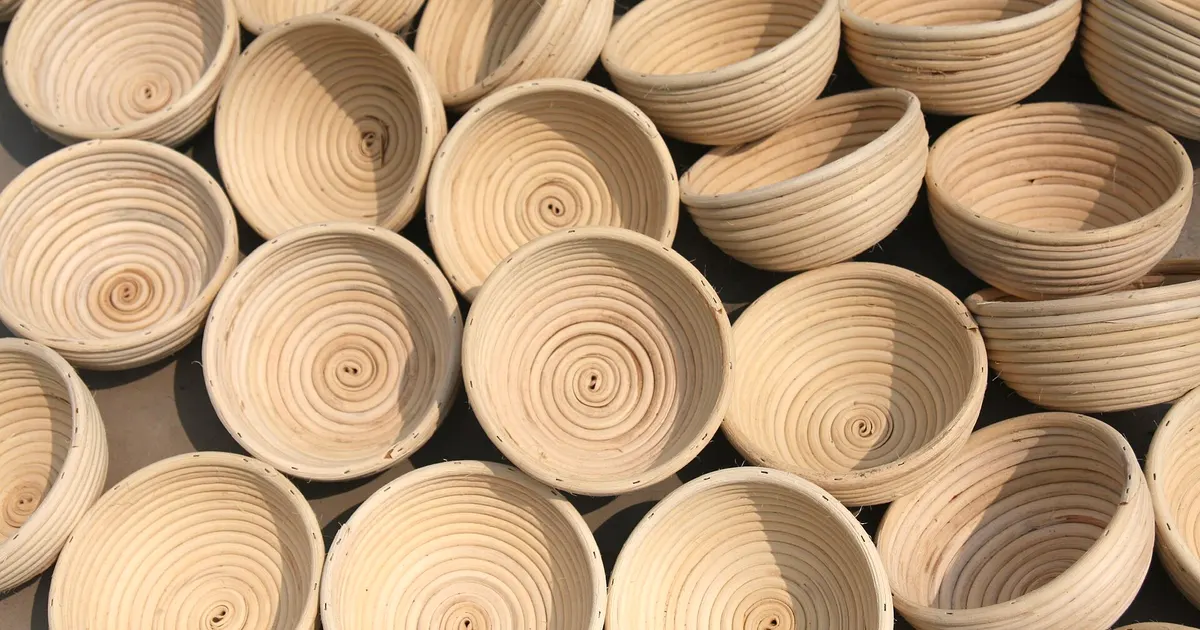
Bamboo, rattan and acacia are a natural fit for Vietnam ODM. Craft villages around Hanoi and the south have worked bamboo and rattan for generations, and plantation acacia supplies wood for boards, bowls and furniture. For a D2C brand, these materials offer a story, a look and a price point that plastic cannot copy.
They also behave differently from plastics. Every piece differs slightly, moisture moves through them, and insects and mold are real risks. This guide covers what to specify, what to test and how to approve a natural-material product, so the first shipment matches the sample. It pairs with private label from an existing factory product, since many natural-material products start from a factory’s current range.
The three materials in brief
Bamboo. A fast-growing grass. It is used as round culm (the hollow stem), split strips for weaving, steamed and pressed boards, and laminated panels. Laminated bamboo is common for cutting boards, trays, utensils and storage.
Rattan. A vine-like palm. Natural rattan is peeled or cored into cane for weaving and bending baskets, bowls, chairs and decor. Synthetic polyethylene rattan, used for outdoor furniture, is a different material sold under a similar name.
Acacia. A plantation hardwood. It is cut into boards, bowls and furniture parts, and it has a distinct grain with strong color variation. Density depends on species, typically in the range of roughly 550 to 700 kg/m3, so confirm the species and grade with the factory.
What to check on each material
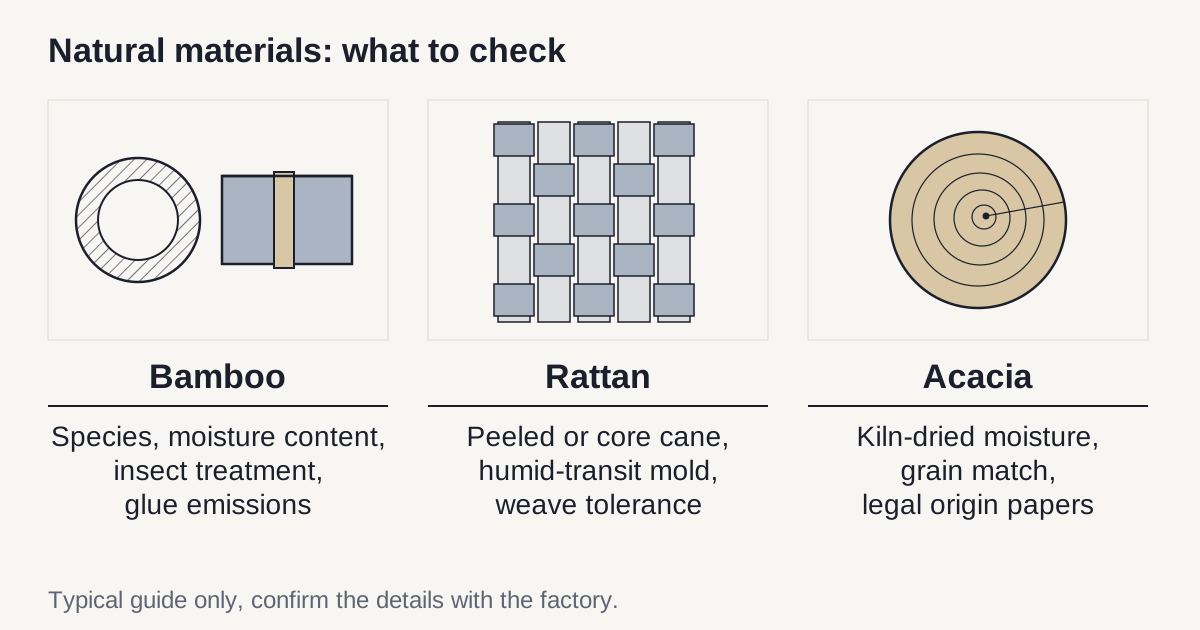
| Material | Typical products | Watch points | Typical finish |
|---|---|---|---|
| Bamboo | Boards, cutlery, trays, steamers, baskets | Species, moisture, insect treatment, glue emissions | Food-safe oil or lacquer |
| Rattan | Baskets, bowls, chairs, storage | Peeled or core cane, mold in humid transit, weave tolerance | Clear coat or natural |
| Acacia | Boards, bowls, furniture, outdoor items | Kiln-dried moisture, grain match, legal origin papers | Oil, wax or lacquer |
Species matters. Moso is the species most often used for laminated bamboo boards, while local species are common for woven and round-culm products. Ask the factory for the species name and where the raw material comes from.
Natural variation: specify the range
A natural material is never uniform. A spec that says “light brown” will bring a dozen shades. Fix the range in writing:
- Color. A range, shown with three reference pieces: light, middle and dark.
- Grain and knots. What is acceptable on the front face and what is not.
- Weave. Pitch, tightness and the number of visible splices for woven products.
- Dimensions. A wider tolerance than for plastic, often a millimeter or more on boards, and noted for diameter on round items.
Approve a golden sample with limit pieces for the extreme cases, so the inspector can tell a natural variation from a defect. Add photos of acceptable and unacceptable marks.
Moisture, mold and insects
Moisture is the main risk. Wet material can mold in a sealed container, crack when it dries in a heated home or warp after assembly. For export products, a common target is roughly 8 to 12 percent moisture content, measured by a meter at the end of drying and again at packing.
Put these controls in the brief:
- Drying. Kiln drying for wood and controlled drying for bamboo and rattan, with recorded readings.
- Treatment. Boiling, steaming or carbonizing for bamboo, and an insect treatment suitable for the use, such as heat treatment. Ask what chemicals are used and whether they are allowed for the market, and for food-contact items prefer heat-based treatment.
- Packing. Dry cartons, desiccant where needed and a container checked for dryness. Avoid loading in the rain or immediately after a wash.
- Storage. Raised pallets and ventilation in the warehouse, not floor storage during the wet season.
Ask for photos of the drying room, the meter and the packing line during your video walkthrough. The vetting steps are in how to vet a Vietnamese ODM factory.
Finishes and food contact
The finish decides how the product looks, lasts and whether it can touch food.
- Food-safe oil or wax. Common for boards and utensils. It needs reapplication by the customer, so include care instructions.
- Lacquer or varnish. A harder surface for trays, decor and furniture. Check that the coating is suitable for food contact if the product touches food.
- Natural, unfinished. Fine for dry decor, but more prone to stains and moisture.
Glues are part of the product. Laminated bamboo and engineered boards use adhesives, and some adhesives emit formaldehyde. Ask which adhesive is used and which emission class applies, and for food-contact items, ask for migration test reports on the finished article. The rules are covered in food contact materials for kitchenware.
Send a brief Send your brief
Legal origin and trade documents
Wood-based products come with paperwork. Acacia boards, bowls and furniture can fall under rules on legal timber.
- United States. The Lacey Act requires an import declaration for certain plant products, including many wood products.
- European Union. The EU Deforestation Regulation covers wood products and requires due diligence on the origin of the material. Its application dates have moved more than once, so confirm the current date and the documents your importer needs.
- Wood packaging. Pallets and crates made of raw wood used for export need heat treatment and marking under the ISPM 15 standard.
Ask the factory for supply-chain records, such as plantation or sawmill invoices, and keep them. A factory that cannot say where its acacia comes from is a risk.
MOQs and lead times
Handwork limits speed. Typical ranges, which vary by product and season:
- Woven bamboo or rattan items: often 500 to 2,000 pieces per design.
- Laminated bamboo or acacia boards and utensils: often 500 to 3,000 pieces per design.
- Furniture: lower MOQs for stock designs, higher for new ones.
- Lead time: commonly 30 to 60 days after sample approval, longer during peak season.
Custom shapes need tooling or jigs, and custom finishes need test samples. Count both in the schedule and in the budget.
Samples and approval
Natural-material samples need more rounds than plastic ones, because the maker adjusts by hand. Ask for a production-method sample, not a showroom piece, and check it for size, weight, finish and smell. A strong chemical smell in a bamboo or wood item can point to a heavy coating or an adhesive that needs a look.
Review the sample at the moisture it will have in use. A board that looks flat in a dry sample room can bow after a humid sea voyage. Some buyers run a simple test: leave a sample in a damp place for a few days and a dry place afterward, then check for warp, cracks and mold.
Care instructions and returns
Customers of natural-material products often cause their own returns through poor care. Print clear care instructions on the box or an insert: hand-wash, no soaking, no dishwasher unless tested, oil a board from time to time and keep it away from heat. Matching the care text to the tests keeps claims honest.
Plan for a small percentage of cosmetic returns from natural variation. A listing that shows a range of colors in photos reduces complaints.
Sustainability claims
Bamboo and rattan are often sold on environmental messages. Make only claims you can support. In the US, the FTC Green Guides cover terms such as recyclable, biodegradable and compostable, and a claim of “eco-friendly” without support invites a challenge. A bamboo product that includes plastic resin, a synthetic coating or melamine is not simply natural, so the label should match the real composition. If you want a forest certification, ask the factory whether its supplier chain holds it and for the certificate that covers your order, since a certified plantation does not make every product certified.
Checklist
- Material and species named, with the origin recorded.
- Color, grain and weave ranges written, with limit pieces.
- Moisture target and measurement points in the spec.
- Insect treatment method stated.
- Finish and glue named, food-contact tests booked if needed.
- Legal origin documents requested.
- Packing and container dryness plan agreed.
Next step
Put the material, finish, use and target market into your brief, with photos of the look you want. Then send your brief. We reply within 24 business hours and match you with up to 3 Vietnamese ODM factories. You agree samples, tolerances and tests with the factory you choose.
Frequently asked questions
Which is better for kitchenware, bamboo or acacia?
Both are used for boards, bowls and utensils. Laminated bamboo is light, hard and uniform, and acacia has a rich grain and a harder, denser feel. The choice depends on look, weight, price and the finish. For either, ask for the finish and glue used and for food-contact test reports on the finished article.
What moisture content should bamboo and wood products have for export?
A common target for export products is roughly 8 to 12 percent, which sits near the humidity of many import markets. Products shipped above that range risk mold and cracking. Ask the factory to measure moisture with a meter at the end of drying and again at packing, and to record the readings.
Do bamboo and acacia products need legal origin documents?
Wood-based products such as acacia boards and furniture often do. The US Lacey Act requires a plant declaration for certain imported plant products, and the EU Deforestation Regulation covers wood products, with application dates that have moved more than once. Ask the factory for supply-chain records and confirm the current rules with your customs broker.
Are rattan products always natural rattan?
No. Many outdoor furniture and basket products use synthetic polyethylene rattan wrapped around a metal frame, sold under similar names. Natural rattan is a vine-based material used for woven and bent products. State which one you want in the brief, and ask for a close-up photo of the material before approval.