- A golden sample is one approved production-quality sample that becomes the written and physical standard for every unit that follows.
- Seal at least three identical sets: one for you, one for the factory and one for the inspector, each tagged with date, revision and signatures.
- A golden sample alone is not enough. Pair it with written tolerances for color, dimensions and cosmetic defects so inspectors can decide pass or fail.
- Replace the golden sample after any design change, and for materials that age such as fabric, rubber or leather.
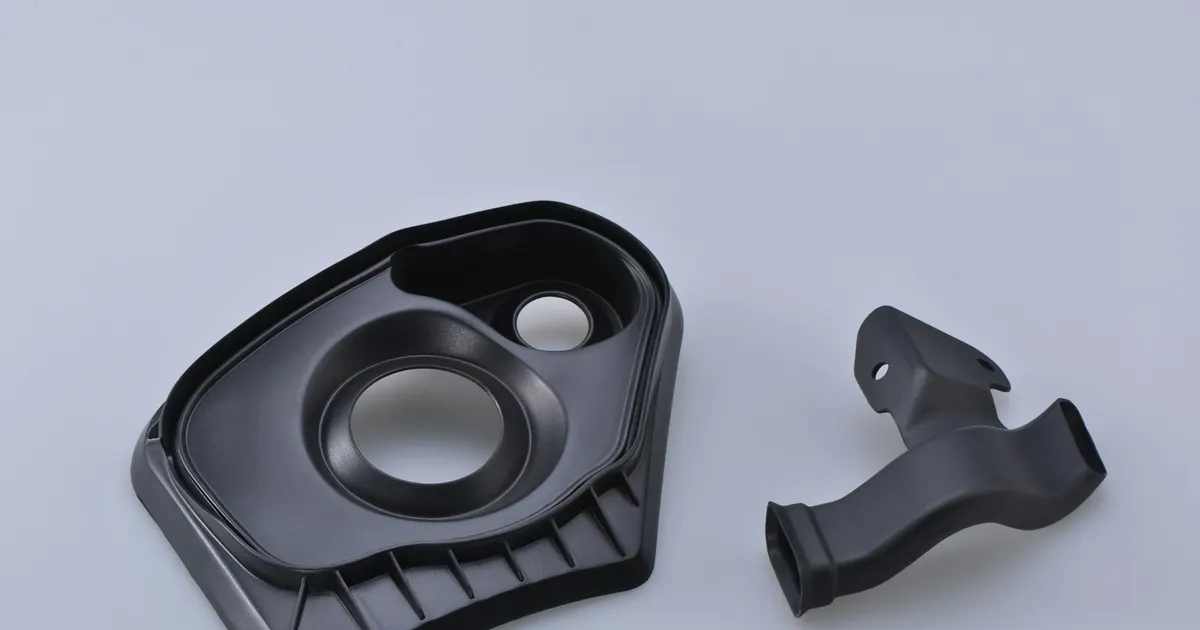
Most quality disputes in an ODM order come down to one sentence: “this is not what we approved.” The sentence is hard to settle if nobody can show what was approved. A golden sample answers it. It is one sample, made the way production will make it, that both sides sign as the standard.
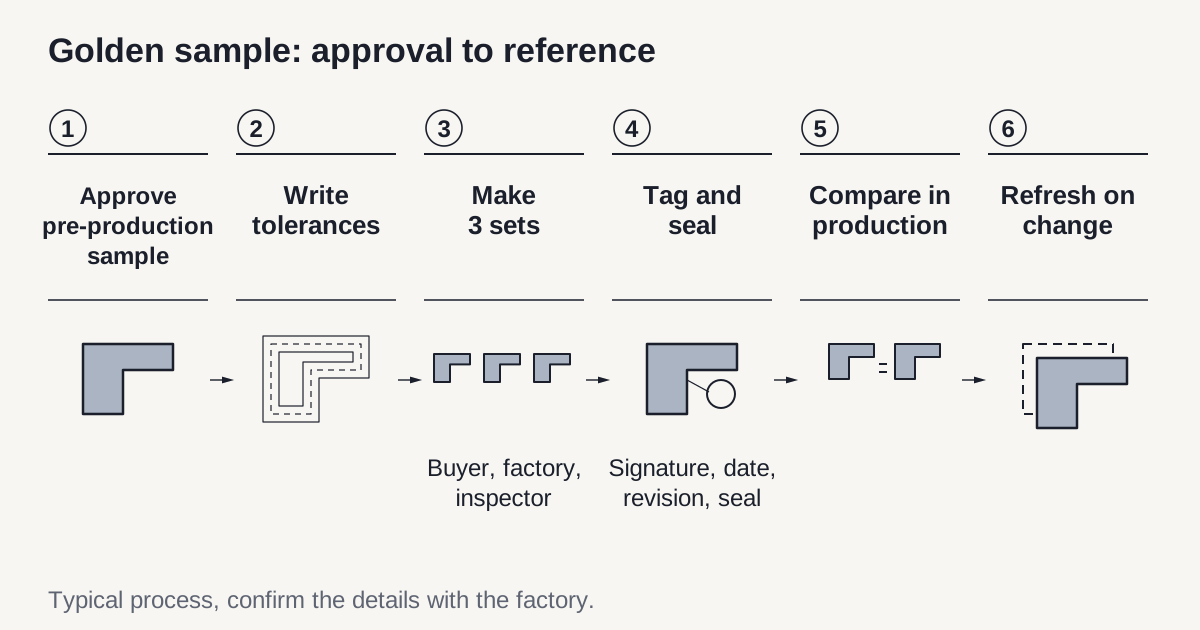
This guide covers when to approve it, what to check, how to write the limits around it and how to use it once production starts. It follows from the sample stages described in prototype, EVT and pre-production samples and feeds into AQL inspection.
What a golden sample is, and what it is not
A golden sample is a physical reference tied to a written approval. It is not a nicer-than-average piece picked from a batch, and it is not a prototype. It must be made with the production tool or line, with the final materials, color, finish, labels and packaging.
Three things make it a standard and not just a sample:
- A revision. The drawing or spec revision it matches is written on the tag.
- Signatures and a date. Both the buyer and the factory sign. Some buyers add the inspector.
- A seal. A tamper-evident label, sealed bag or tagged box prevents silent swaps.
A sample without these three is only a photo opportunity.
When to approve it
Approve it after the pre-production sample and before mass production starts. At that point the tooling is final, the material is the production material and the factory knows the process. If you approve earlier, from a hand-finished piece, you lock in a standard the line cannot repeat.
For products with several variants, such as colors or sizes, approve a golden sample for each variant that differs visibly. A black version and a white version do not share a color standard.
The measured report that supports the approval is covered in first article inspection for consumer products; the project around it is in ODM product development.
What to check before you sign
Check the sample against the specification, not against how it looks on first impression. A short review table helps.
| Area | What to check | Evidence |
|---|---|---|
| Dimensions | Critical sizes against drawing tolerances | Caliper or gauge readings |
| Weight | Within agreed range, especially for metal or filled parts | Scale reading |
| Color | Against the master swatch or color standard | Lab or light-box comparison |
| Finish | Gloss, texture, brushing direction | Photos under set lighting |
| Function | Fit, moving parts, closing force | Test notes |
| Labels | Content, position, language, barcode | Photo of label and carton |
| Packaging | Inner box, insert, master carton marks | Photos, drop test result |
Photograph every side of the sample against a plain background with a ruler visible. Keep the photo set with the sealed pieces. If the sample is later lost or damaged, the photos still define the standard.
Write the limits next to the sample
Samples cannot be identical, so the standard has to say how much difference is acceptable. A golden sample without limits turns every inspection into a debate. Write these down and attach them to the approval:
- Dimension tolerances. The tolerance on each critical dimension, taken from the drawing.
- Color difference. Agree on a color standard, such as a Pantone reference or a physical swatch, and a maximum difference value measured with a spectrophotometer. Tight color matching often uses a small difference value, but confirm the figure with the factory for your material.
- Cosmetic limits. Photos showing an acceptable mark, a borderline mark and a rejected mark, with size and location rules. A scratch on a hidden face is not the same as one on the front.
- Function limits. Closing force, hinge angle or fit gap, with a range.
Some buyers add limit samples, which are physical pieces at the edge of acceptable. They are useful for cosmetic items such as texture, gloss and print alignment.
How many sets, and who keeps them
Make three identical sets at the same time, from the same run:
- Buyer. Kept in a safe place and used when a dispute arises.
- Factory. Kept on the production floor or in the QC room in a sealed box, and checked by line leaders and QC staff.
- Inspector. Given to the inspection company or kept at a local office, so the person doing the pre-shipment check sees the same reference.
For several production lines or factories making one product, give each line a set. Record where each set is stored.
Using the golden sample in production
The sample earns its value during production, not at the signing. Ask the factory to keep it at the line head and to use it for three checks:
- First-article check. The first units off the line are compared against the golden sample before the batch continues.
- In-process checks. Line leaders compare at set intervals, for example each shift change.
- Pre-shipment inspection. The inspector compares sampled units against it, together with the defect rules in the agreed sampling plan. The sampling plan itself is covered in AQL inspection levels.
When a unit fails, take a photo next to the golden sample and the limit photos, and record the defect type. This keeps the discussion on evidence.
Send a brief Send your brief
When to replace it
A golden sample is not permanent. Replace it when:
- The design changes. Any engineering change order that affects shape, material, color or packaging needs a new approved sample with a new revision tag.
- The material ages. Fabric, leather, rubber, some adhesives and some plastics change color or feel over time. Check the sample every six months or so and refresh it if it has drifted.
- The factory changes a supplier. A new resin supplier, dye lot or coating source can shift color and finish. Ask for a new sample before the first shipment.
Mark the old sample as superseded and keep it in the archive with the revision tag.
Special cases: color, soft goods and electronics
Some products need extra care when you set the standard.
- Color-critical products. Light changes how color looks. Compare under the same light source every time, ideally a standard light box, and keep the color swatch with the sample. Glossy and matte surfaces of the same pigment look different, so approve the finish and the color together.
- Soft goods. Fabric, leather and foam change with time, humidity and handling. Store the sample flat or hung as it will be sold, away from sun, and note the fabric lot and dye lot on the tag. Because the roll changes between batches, ask the factory to match the approved lot or send a new sample whenever the supplier changes.
- Electronics and appliances. Add function criteria to the standard: power draw, sound level, cycle count and the result of the factory’s end-of-line test. Keep a printed copy of the firmware version on the tag, since a new firmware can change behavior without any visible difference.
- Sets and kits. Approve the full set as sold, including the manual, the accessories and the packaging, not only the main item.
Common mistakes
- No signature, no date. An unmarked sample is only a sample. Put the revision, date and both signatures on the tag.
- One copy only. If the single copy is lost or damaged, the standard is gone. Make at least three.
- Approving too early. A hand-made piece sets a standard the line cannot repeat.
- Standard without limits. A reference piece cannot say how much difference is acceptable. Attach written limits.
- Never refreshing it. A golden sample that no longer matches the current revision becomes a source of arguments, not a way to end them.
A short golden sample checklist
- Made on production tools or line, with final materials and packaging.
- Checked against the specification and photographed.
- Written limits for size, color, cosmetics and function attached.
- Three identical sets, tagged with revision, date and signatures.
- Sealed with a tamper-evident label.
- Stored at buyer, factory and inspector, locations recorded.
- Replaced on design, supplier or material changes.
Next step
Write down your critical dimensions, color reference and cosmetic limits before the factory makes the pre-production sample. Then send your brief. We reply within 24 business hours and match you with up to 3 Vietnamese ODM factories. The sample approval itself is a step you run directly with the factory you pick.
Frequently asked questions
What is a golden sample?
A golden sample is a finished sample, made with production materials and processes, that the buyer approves in writing as the standard for the order. It is tagged and sealed so that nobody can change it later. Factory staff, the buyer and any inspector compare production units against it. Some companies call it a gold seal sample or an approved reference sample.
How many golden samples should I ask for?
Three identical sets is the common minimum: one kept by the buyer, one kept by the factory and one given to the inspection company or kept in the buyer's local office. For high-volume programs or multiple production lines, ask for one set per line. The factory can usually make the extra sets cheaply during the same sample run.
When should the golden sample be approved?
After the pre-production sample, made on the production tool or line with final materials, color and packaging. Approving it earlier, from a hand-made or prototype piece, locks in a standard the production line may not be able to match. Approve it before the deposit for mass production is released.
What if production units differ slightly from the golden sample?
Small differences are normal, so the standard needs written limits: dimensional tolerances, a color difference value, and photos of acceptable and unacceptable cosmetic marks. Units inside the limits pass. Units outside them are defects counted under the agreed inspection plan. Without written limits the argument becomes one of opinion.