- Outdoor gear is judged by weather, weight and wear. The fabric, coating, seams and zips matter more than the shape.
- Waterproof ratings such as hydrostatic head describe fabric under lab pressure. Seams, zips and stitching holes decide leaks in the field.
- Test in layers: material tests in the lab, finished-item tests on the bench and field tests with real users in real weather.
- Ask about PFAS-free water repellents and recycled fabrics early, since rules and retailer policies are changing in several markets.
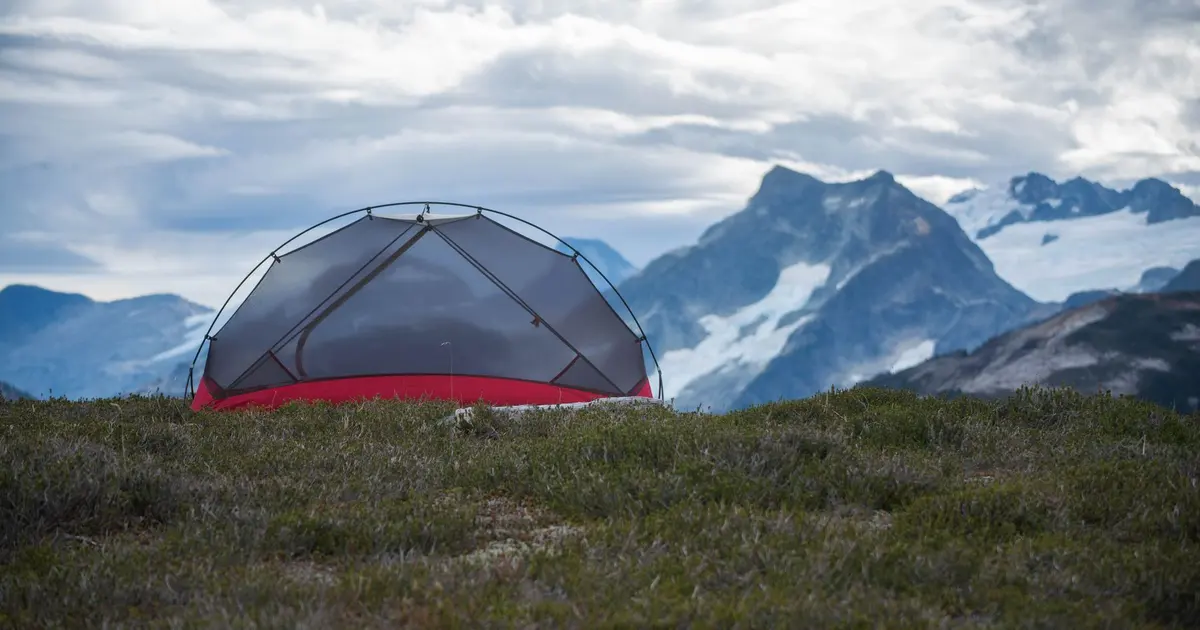
Outdoor gear is returned in dramatic fashion. A tent leaks on the first wet night, a pack strap tears on the second trip or a zipper jams in cold. Reviews follow, and a new brand rarely recovers from a bad start. The difference between good and bad gear is mostly in the materials, the seams and the testing.
This guide covers fabrics and coatings, waterproof ratings, seams and hardware, lab and field tests and the sample stages. It follows on from prototype, EVT and pre-production samples.
Materials that carry the product
Most camping soft goods use a few families of fabric.
- Nylon. Strong for its weight. Common in ripstop weaves, where thicker threads in a grid stop tears spreading. Used for tents, packs and sleeping bag shells.
- Polyester. Resists UV and stretches less when wet. Common in tent flies and lower-cost packs.
- Canvas and cotton blends. Heavy and durable, used for bell tents and camp furniture. They are heavy to carry and need care against mildew.
- Mesh and netting. For tent inner doors and pack pockets. Check the tear strength and the melting behavior near heat.
- Insulation. Down or synthetic fill for sleeping bags and jackets. Down is rated by fill power. Synthetic fill is cheaper and keeps warmth when damp.
Thread weight, in denier for fibers, and fabric weight set the balance between strength and carry weight. A very light fabric saves grams and tears sooner. Match the fabric to the use, from day trips to extended trekking.
Coatings and treatments
A bare fabric does not keep water out. A coating or a treatment does.
- Polyurethane (PU) coating. The most common. Applied to the inside of the fabric, usually in layers. It can break down with age in humid storage, a process called hydrolysis.
- Silicone coating. Light and strong, used on some ultralight tent fabrics. It is hard to tape, so seams need a special method.
- Durable water repellent (DWR). A surface treatment that makes water bead up. It wears off with abrasion and washing and can be refreshed.
- UV treatment. Helps a tent fly resist sun damage.
PFAS restrictions are expanding in several markets, and many retailers ask for PFAS-free repellents. Ask for a PFAS-free DWR option and a test report for your market before you commit to a fabric.
Waterproof ratings
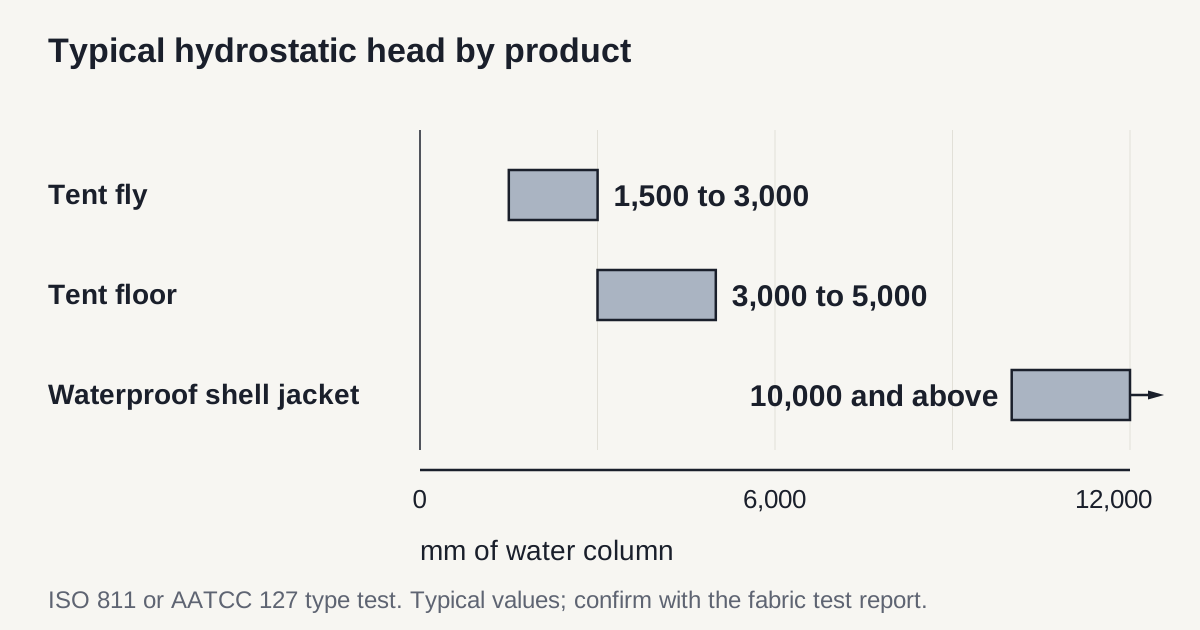
The usual measure is hydrostatic head, tested under standards such as ISO 811 or AATCC 127. A fabric is held under rising water pressure, and the height of the water column at which water seeps through is recorded in millimeters.
| Product part | Typical hydrostatic head |
|---|---|
| Tent fly | About 1,500 to 3,000 mm |
| Tent floor | About 3,000 to 5,000 mm |
| Waterproof shell jacket | About 10,000 mm and above |
These are typical planning figures, not promises. The number describes new fabric on a bench. Real leaks come from seams, zips, stitch holes, abrasion and a worn coating. Test the finished item too, for example by pitching a tent and spraying it for a set time.
Seams, zips and hardware
Most failures happen where parts join.
- Seams. Needle holes let water in. Use seam tape or welded seams on waterproof items. Check the tape adhesion after washing and flexing.
- Stitching. Stitch density and thread type decide strength. Load points need box stitches or bar tacks.
- Zips. Check size, brand or grade, pull strength and cycle life. Waterproof zips need the right coating.
- Buckles and clips. Check break load and cold-weather behavior, since some plastics get brittle in the cold.
- Poles and frames. Aluminum or fiberglass for tents, with bending and fatigue tests.
- Webbing and straps. Strength, abrasion and UV.
Ask for the supplier and the grade of key hardware, and keep it fixed. A switch of zipper maker in production changes the product without changing the name.
Lab tests on materials and parts
Lab tests catch many problems early and are repeatable.
- Hydrostatic head. Fabric and seamed samples.
- Tear and tensile strength. Fabric, seams and webbing.
- Abrasion. Rub tests on fabric, such as Martindale or Taber methods.
- Colorfastness. Light, rub and wash. Camping gear sits in the sun for days.
- Flame behavior. Tents are tested for flame spread in some markets, such as the CPAI-84 standard for tents in the US. Check the rule for your market.
- Cold flex. Fabric and coating behavior at low temperatures.
- Fill power and weight. For down, using the lab method and a declared origin standard.
Name a test lab or approve the factory’s choice in advance. See pre-launch product testing for how to plan lab, drop and fatigue tests together.
Send a brief Send your brief
Finished-item tests
Some failures only appear when the product is built.
- Pitch and strike. Set up and take down a tent many times, and note poles, sleeves and zips.
- Rain test. Spray the pitched tent or the worn jacket for a fixed time and check inside.
- Load test. Fill a pack to rated weight, hang it and walk or shake it.
- Cycle test. Open and close zips, buckles and drawcords many times.
- Wind and stability. Check guy lines, pegs and pole behavior in wind, using a fan or real conditions.
- Packed size and weight. Measure against the claim on the label.
Write each test with a method, a count and a pass limit, so a result is a decision and not an opinion.
Field testing
Lab tests do not capture how people use gear. Field tests do.
- Real weather. Use the product in rain, wind, cold and sun.
- Real users. Different heights, strengths and skill levels find different problems.
- Real loads. Packs carry real equipment, tents face real campsites.
- Notes and photos. Ask testers to record what failed, when and how.
Plan field testing between the engineering sample and the pre-production sample, so findings can still change the design. A pre-production sample that is approved without field use is only a bench sample.
Sample stages for outdoor gear
- Concept and spec. Use case, weight target, fabric choice and key tests.
- Prototype. A first build for fit and function. Often made with stock fabric.
- Engineering sample. Made with the final fabric and hardware for lab and bench tests.
- Field test round. Users test it and report. Revise.
- Pre-production sample. Made on the line with final materials, labels and packing. Approve it as a golden sample.
- Production and inspection. Check seams, tape, zips and packaging on sampled units.
Expect two or three rounds for a new tent or pack. Factories need time to adapt patterns and tape methods.
Labels, claims and packing
Claims are checked by customers and by competitors.
- Weight. State packed weight and tested weight honestly, with the method.
- Waterproof claims. Use the test result and the standard, not marketing words.
- Temperature ratings. For sleeping bags, use a recognized test standard and a lab report.
- Care labels. Based on real wash and storage tests.
- Packing. Compression sacks and cartons that protect zips and poles.
Common mistakes
- Quoting only the fabric rating. Seams and zips decide the leaks.
- Skipping field testing. The bench does not find every failure.
- Switching hardware in production. A new zipper changes cycle life.
- Overstating claims. Weight and temperature numbers draw returns.
- Ignoring PFAS rules. A retailer may reject a repellent that is legal today.
Checklist before you order
- Define the use, the weight target and the weather limits.
- Choose fabric, coating and hardware, with named suppliers.
- Ask for a PFAS-free DWR option and test reports.
- Plan seam sealing and finished-item rain tests.
- Set lab tests with methods and pass limits.
- Plan a field test round before the pre-production sample.
- Write materials, tests and remedy into the order.
Next step
Write down the product, the use case, the weight and weather targets, the quantity and your market. Then send your brief. We reply within 24 business hours and match you with up to 3 Vietnamese ODM factories. Testing, samples and contracts are agreed directly with the factory you choose. For the wider route, read ODM manufacturing in Vietnam.
Frequently asked questions
What does hydrostatic head mean?
It is the height of a water column, in millimeters, that a fabric can hold back before water comes through. A higher number means more resistance. Typical tent fabrics are rated in the low thousands of millimeters and waterproof jackets higher. The test is done on the fabric, so seams, zips and use wear change the real result.
Do I need seam taping?
For any product that must keep out rain, yes. Needle holes at stitched seams let water through, so waterproof tents, jackets and packs use tape or welded seams over them. Ask the factory how seams are sealed, and test finished samples, not only the flat fabric.
How long should I field test?
As long as it takes to see the failures that matter. A tent may need a few nights of real weather and repeated pitching. A pack needs weeks of loaded use. Plan field tests between the engineering sample and the pre-production sample, so changes can still be made before bulk production.
What is PFAS-free DWR?
DWR stands for durable water repellent, the surface treatment that makes water bead on fabric. Older versions used fluorinated chemicals, known as PFAS, and rules and retailer policies in several markets are restricting them. PFAS-free versions exist, and their water repellency can wear off faster. Ask for a PFAS-free option and a test report for your market.