- Beds, toys and accessories have different risks: fill and seams on beds, stitching and small parts on toys, hardware load and webbing on collars and leashes.
- Pet products are regulated more lightly than children's toys in most markets, so the brand carries much of the duty of care. Set your own test plan.
- Typical materials from Vietnam include cotton and canvas, polyester fiberfill, rope, rattan and bamboo, natural rubber and metal hardware.
- Test with real pets in mind: tug, chew, wash and drop tests on finished samples, plus a chemical screen for the market you sell in.
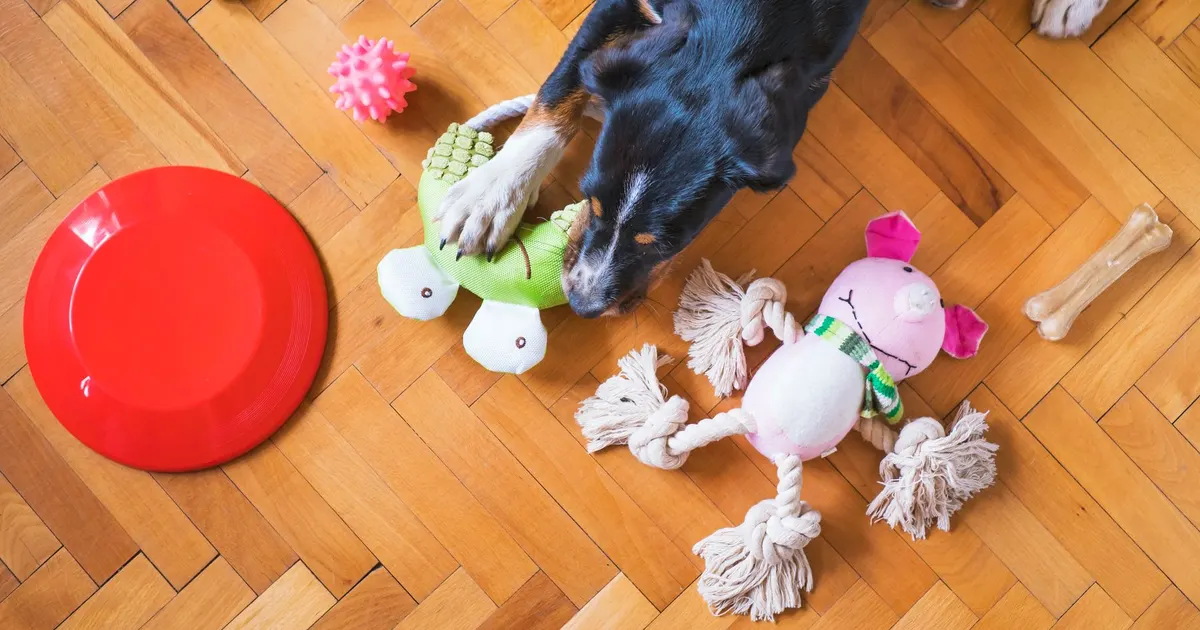
Pet products are a fast-growing category with low entry barriers, which is why the market is crowded. A new brand needs a product that looks distinct and survives real use. Dogs chew, cats scratch and owners wash, so the product needs more than good photos.
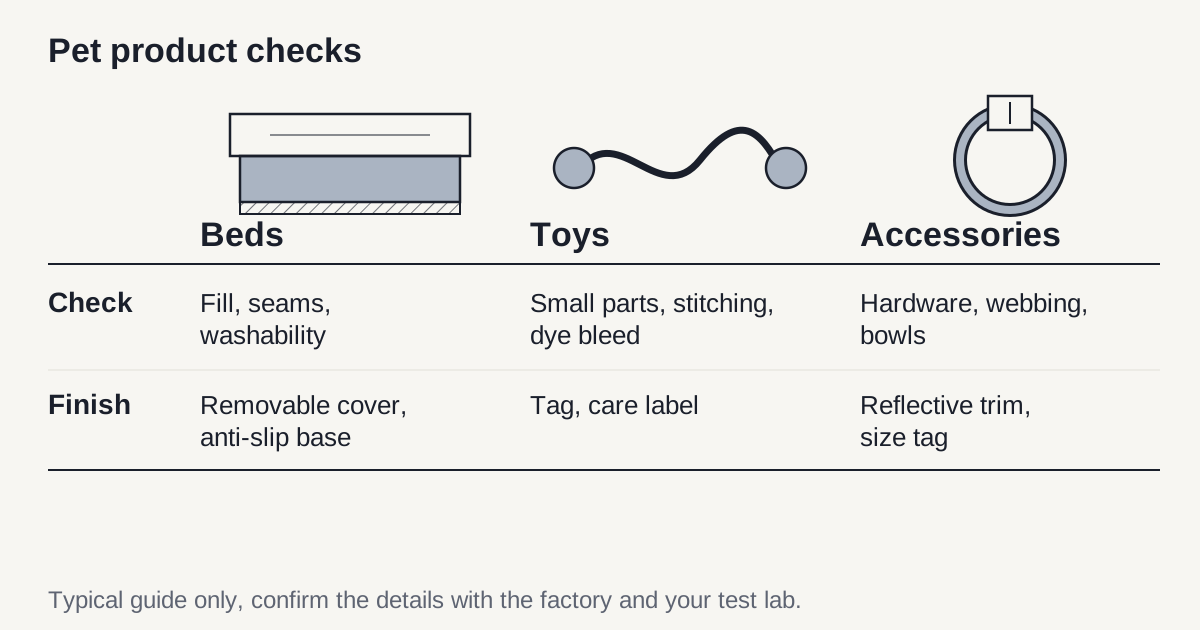
This guide covers the three main product groups, materials, safety checks, tests and what to write in the order. It uses the fabric basics in cotton, polyester and blends and the natural-material notes in bamboo, rattan and acacia.
Three product groups, three sets of risks
Each group fails in a different way, so each needs its own checks.
| Group | Typical products | Typical materials | Main risks |
|---|---|---|---|
| Beds | Cushion beds, nests, mats, covers | Cotton, canvas, polyester fill, foam, rattan | Flat fill, seam failure, odor, slipping on floors |
| Toys | Plush, rope, rubber, squeakers | Fabric, cotton rope, natural rubber, fiberfill | Detached parts, stuffing leaks, dye bleed, chew damage |
| Accessories | Collars, leashes, bowls, harnesses | Webbing, metal and plastic hardware, stainless bowls | Hardware breaking, webbing fraying, rough edges |
Pick one group for a first range, since each group needs different skills in the factory. A factory that makes strong cushion beds may not be the right one for chew toys.
Beds
A pet bed is a sewn or woven product with a filling. The customer notices the feel, the size and the washability.
- Cover fabric. Cotton, canvas, polyester or faux fur. Check abrasion, color fastness and how it handles claws.
- Fill. Polyester fiberfill, shredded foam or solid foam. Ask for the weight of fill per bed, since a bed that looks full when new can go flat in weeks.
- Construction. Double stitching at stress points, a zipper that is hard to open by chewing and a removable cover for washing.
- Base. An anti-slip underside, such as a rubberized fabric or a printed dot pattern.
- Natural beds. Rattan or bamboo frames need smooth finishes and a check for mold in humid transit.
Set the size by the pet’s weight and length, and ask the factory for a size chart. Test the cover in a real wash, and measure the bed before and after.
Toys
A toy meets teeth. That raises the bar for stitching, parts and materials.
- Plush toys. Check seam strength, the stuffing’s cleanliness and whether eyes and noses are embroidered or sewn on. A glued-on or plastic part can detach.
- Rope toys. Cotton or jute rope with tight knots. Loose fibers can be swallowed, so many buyers avoid cheap blends that shed.
- Rubber and TPR toys. Natural rubber, thermoplastic rubber or silicone. Check for odor, color bleed and tears at thin spots.
- Squeakers. Seal them in a separate pouch and check that the pet cannot reach the squeaker through a seam.
Pets differ, and a toy safe for a small dog may not suit a strong chewer. Say which pet and size the product targets, and say that no toy is chew-proof.
Accessories
Collars, leashes and harnesses carry the pet’s weight and the owner’s pull, so hardware matters.
- Webbing. Nylon, polyester or cotton. Check width, thickness and edge finish. Rough edges irritate skin.
- Hardware. Buckles, D-rings, clips and sliders in plastic or metal. Check the break load and the finish.
- Stitching. Box stitches or bar tacks at load points.
- Bowls. Stainless, ceramic or plastic. Food-contact rules apply, and stainless needs the right grade, as covered in the stainless steel guide.
- Reflective trim. Check adhesion after washing.
Specify the break load for the size, with a margin. A leash for a large dog and one for a small dog need different hardware.
Regulation and retailer rules
Pet products sit in a lighter regulatory space than children’s toys in most markets, but they are not free of rules.
- General product safety. Many markets require products to be safe in normal use.
- Chemical rules. Restrictions on substances in articles, such as the EU REACH rules, can apply. California Proposition 65 can apply to lead and other chemicals.
- Food-contact. Bowls and feeders can fall under food-contact rules.
- Retailers and marketplaces. Many ask for test reports before listing, and some set stricter limits than the law.
Because the legal floor is lower, the brand’s own test plan matters more. Ask your retailer which reports it needs and your test lab which tests suit your product.
Send a brief Send your brief
Tests that copy real use
Lab tests give numbers. Simple use tests find what the numbers miss.
- Tug test. Pull seams, ropes and handles with a set force and hold for a set time.
- Chew inspection. Check how the product behaves after strong chewing, and look for parts that come off.
- Wash test. Wash a bed cover or toy several times, then check shrinkage, color and stuffing.
- Drop and abrasion. Drag the product over a floor and test the surface.
- Odor check. Smell the product out of the bag, since a strong chemical smell leads to returns.
- Chemical screen. Dyes, heavy metals and plasticizers, based on the market and the material.
The testing plan in pre-launch product testing shows how to combine drop, fatigue and lab reports.
MOQ and development
MOQ depends on materials and tooling.
- Sewn goods. Beds and plush toys depend on fabric and trim minimums, often a few hundred units per style, per color.
- Rope and woven goods. Depend on rope dyeing and weaving.
- Rubber and molded goods. A mold needs enough volume to cover its cost.
- Private label of a catalog item. Usually the lowest MOQ, since the pattern or the mold exists.
Plan two or three sample rounds. Send a pet-size reference, a drawing and a target price. Approve a golden sample made with final materials.
Labels and packaging
Pet packaging sells the product, since buyers cannot touch it online.
- Content labels. Material, size, care and origin.
- Warnings. Supervise use, remove damaged toys and follow the size guide.
- Packaging. Shelf-ready boxes or poly bags, with a barcode.
- Photography samples. Ask for pre-production samples for your product photos.
Common mistakes
- Mixing groups in one range. Each group needs a different factory skill.
- Ignoring washability. A bed that cannot be washed returns quickly.
- Skipping the chew check. A toy that sheds parts is a liability.
- Trusting the lighter rules. The retailer’s test list may be stricter than the law.
- Approving the sample from another fabric. The sample fabric must match production.
Checklist before you order
- Choose one product group for the first range.
- Define the pet size and the use.
- Set materials, fill weight and hardware load.
- Plan tug, wash, drop and odor tests.
- Ask your retailer which reports it needs.
- Approve a sealed pre-production sample.
- Write materials, tests and remedy into the order.
Next step
Write down the product, the pet size, the materials you prefer, the quantity and your market. Then send your brief. We reply within 24 business hours and match you with up to 3 Vietnamese ODM factories. Samples, testing and contracts are agreed directly with the factory you choose. For the wider route, read private label manufacturing in Vietnam.
Frequently asked questions
Are pet products regulated like children's toys?
Generally not, and the rules vary by market. Children's toys have strict standards for small parts, lead and phthalates in many markets. Pet products usually fall under general product safety, chemical rules for articles and retailer requirements. Check the rules of your target market, and ask your retailer or marketplace which test reports it asks for.
What materials do Vietnamese factories use for pet products?
Common choices include cotton and canvas for covers, polyester fiberfill for stuffing, cotton and jute rope for toys, rattan and bamboo for beds and baskets, natural rubber for chew toys and metal or plastic hardware for collars and leashes. Ask for material details and test reports, since pets chew and lick what they use.
What is a good test for a pet toy?
Simple tests that copy real use. A tug test pulls seams and ropes with a set force. A chew test or inspection looks at how pieces behave when bitten. A drop and wash test shows if stuffing leaks or color bleeds. Also check for small parts that could detach, such as eyes, squeakers and buttons, and ask for a chemical screen.
What MOQ should I expect?
It depends on the product. Sewn goods such as beds and plush toys are often set by fabric and trim minimums, with a typical range of a few hundred units per style. Rope, rubber and molded items may need higher quantities because of tooling. Ask each factory for the MOQ per style and per color.