- A shoe starts with a last, the form that sets fit and shape. A new last and new sole molds are the main one-time costs in footwear ODM.
- Sole molds are made per size, so the cost grows with the size range. Reusing an existing last or sole from the factory cuts cost and time.
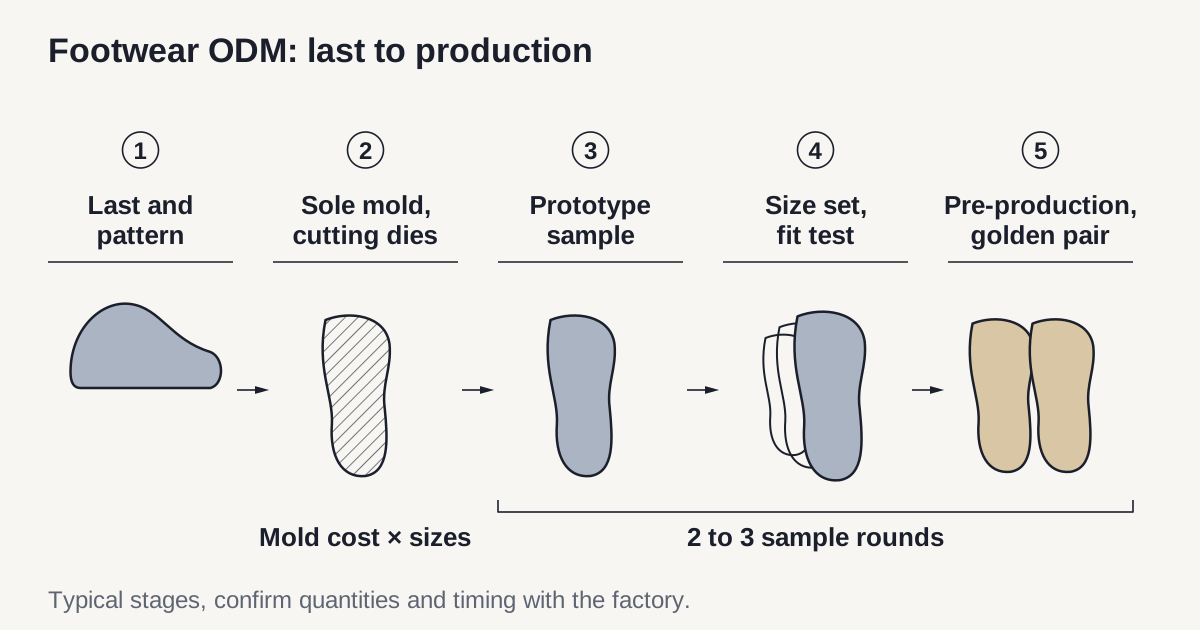
- Expect two or three sample rounds: prototype, fit and size set, then a pre-production pair that becomes the golden sample.
- Test flex, sole bond, wear and chemicals on finished shoes, and fix the sizing and tolerances in writing.
Footwear looks like a soft-goods project and behaves like a tooling project. A shoe has dozens of parts, each cut or molded, and a size range multiplies the work. That is why a first footwear order takes longer and costs more to prepare than a first tee or a first tote.
This guide explains lasts, sole molds, the sample rounds, materials, tests and what to write in the order. For the mold cost logic behind soles, see injection mold tooling cost.
Start with the last
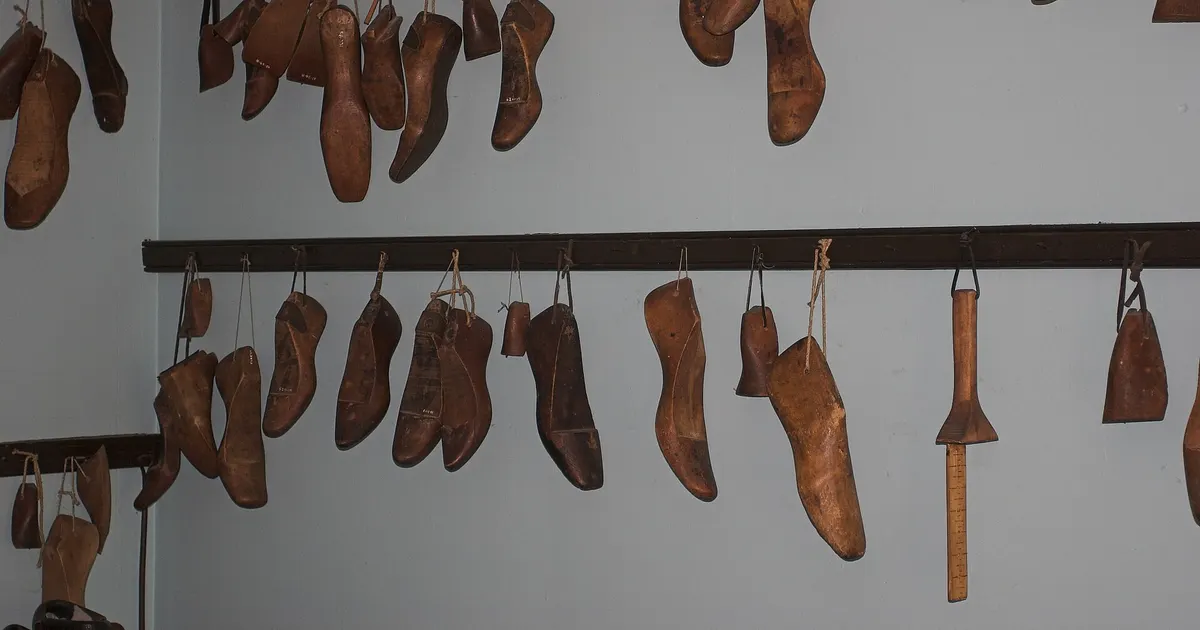
A last is the form around which the upper is shaped. It sets the length, width, toe shape, heel height and volume of the shoe. Two shoes of the same size from different lasts can fit very differently.
- New last. Developed from your design and target foot. It gives a distinct fit, and it takes time and a development fee.
- Existing last. The factory already has lasts for styles it makes. A close match saves time and cost.
- Last per size. A last is graded across the size range, so a full set is produced.
Fit problems often start with the last, not with the upper. Ask the factory how it develops lasts and how many fit rounds it plans.
Sole molds and cutting dies
Two kinds of tooling shape the shoe.
- Sole molds. Outsoles and midsoles in rubber, EVA, TPU or PU are made in molds. A mold is needed for each size or size group, and often for each part.
- Cutting dies. Upper parts such as leather, mesh and synthetic panels are cut with dies or by machine. Dies are cheaper than sole molds and are made per size set.
Sole molds are usually the largest one-time cost. The cost rises with the number of sizes and the complexity of the tread pattern. Ask for a quote that lists molds per size and which sizes can share one. Ask who owns the tooling, where it is stored and what happens to it if you move production. The logic follows the points in the tooling guide.
Reusing a factory’s existing sole can cut both time and cost. Many brands start with a stock outsole and a custom upper, then develop a custom sole for a second range.
Materials by part
| Part | Typical materials | What to check |
|---|---|---|
| Upper | Leather, mesh, knit, synthetic leather, canvas | Tear strength, color fastness, stretch, thickness |
| Lining | Textile, mesh, leather | Abrasion, moisture behavior |
| Insole | EVA, foam, removable footbed | Compression, odor, thickness |
| Midsole | EVA, PU, TPU | Hardness, rebound, compression set |
| Outsole | Rubber, TPR, EVA | Hardness, wear, grip, bond |
| Adhesives and thread | Cement, PU glue, nylon thread | Bond strength, restricted substances |
Name materials and thickness for each part in the specification. A change from one rubber compound to another changes grip and wear without changing the look.
Sizing and grading
A size run is more than a set of numbers. Each size needs its own last and parts.
- Choose the sizing system. US, UK, EU or Mondopoint, which measures the foot length in millimeters.
- Set the grading step. A full size step is about 8 mm in foot length, and widths grade with it.
- Choose the range. More sizes mean more tooling and more minimums.
- Check the extremes. A design that works in the middle can fail at the smallest and largest sizes.
Provide a size chart for your market, and test the first sample in several sizes before you approve it.
Sample rounds
Treat each round as a gate.
- Last and pattern. The factory develops or selects the last and cuts the pattern from your design.
- Prototype. A first pair, often in one size, made by hand. You check look, materials and construction.
- Size set and fit test. A full or partial size run in final materials. You wear-test, and you check sizes and comfort.
- Pre-production sample. Made on the production line with final molds, materials and packaging. This is your golden sample.
- Production and inspection. A pre-shipment check on sampled pairs.
Plan two or three rounds, and ask each factory for a schedule. As a planning guide, development of a new last takes a few weeks, sole molds take several weeks more and each sample round takes one to three weeks. Check each figure with the factory, since it depends on the construction and the season.
Send a brief Send your brief
Tests for finished shoes
Shoes face repeated flexing, wet and wear. Lab and bench tests copy that.
- Flex test. Repeated bending of the sole and upper at the forefoot to check cracks and bond.
- Sole bond strength. Peel strength between the sole and the upper.
- Abrasion and wear. The outsole rubbed against a standard surface.
- Slip resistance. Required for work shoes in some markets, and useful for any outsole.
- Color fastness. Rub and water tests on uppers and linings.
- Seam and stitch strength. Load tests at stress points.
- Restricted substances. Chemical tests for the market, such as REACH limits in the EU. Children’s footwear has lead and phthalate rules in markets such as the US under CPSIA.
Many tests follow ISO or ASTM methods. Ask your test lab which tests suit your product and your market. See pre-launch product testing for planning drop, fatigue and lab reports.
MOQ and cost drivers
MOQ in footwear depends on several factors.
- Tooling. Molds and dies need enough pairs to be worthwhile.
- Materials. Leather and special fabrics have minimums by the hide or roll.
- Colors and sizes. Each color and size adds a minimum, so a wide range multiplies the order.
- Line setup. Changing styles on a footwear line takes time.
MOQ is usually set per style and color, often in the hundreds of pairs, and it is higher when new molds are needed. A private-label change on a style the factory already makes has the lowest MOQ. Ask each factory how it counts and what the minimum per size is. ODM project cost shows how to compare quotes across buckets.
Quality and inspection
Common footwear defects include glue marks, uneven stitching, wrinkled linings, color mismatch between pairs and loose soles.
- Agree a defect list with photos.
- Check pairs, not single shoes, since left and right must match.
- Plan an inspection before packing, with a sampling plan. See AQL inspection levels.
- Keep a sealed golden pair at the factory and one at your office.
Packaging and labels
Footwear packaging is part of the product.
- Shoe box. Strength for stacking and shipping, with your artwork and a barcode.
- Tissue and stuffing. Protects shape and the finish.
- Labels. Size, material content and origin, as required in the market.
- Care instructions. Based on the materials and tests.
Common mistakes
- New last when an existing one would do. It adds time and cost.
- Ignoring size range cost. Each size adds tooling.
- Approving only one size. Fit varies across the run.
- Changing outsole compound late. Grip and wear change.
- No defect list for pairs. A mismatch is easy to miss.
Checklist before you order
- Decide on a new last or an existing one.
- Ask whether the factory has a sole close to your design.
- Get sole mold cost per size and tooling ownership in writing.
- Specify materials and thickness for each part.
- Plan two or three sample rounds and a size set.
- Choose lab tests for flex, bond, wear and chemicals.
- Approve a sealed pre-production pair.
Next step
Write down the shoe type, a reference photo or drawing, the size range, the quantity per style and your market. Then send your brief. We reply within 24 business hours and match you with up to 3 Vietnamese ODM factories. Lasts, molds and samples are agreed directly with the factory you choose. For the wider route, read ODM manufacturing in Vietnam.
Frequently asked questions
What is a last and why does it matter?
A last is a three-dimensional form, in the shape of a foot, that the shoe is built around. It sets the length, width, toe shape and heel height, so it decides fit and look. A new last costs time and money, and fit problems often trace back to it. Ask whether the factory has a last close to your design before you pay for a new one.
Why are sole molds expensive?
A sole mold is a precision tool, and a separate mold is usually needed for each size or size group. A range of ten sizes means ten molds or a set of shared ones. The cost rises with the number of sizes, colors and parts, such as outsole and midsole. Ask for a quote per size and ask which sizes can share a mold.
What MOQ should I expect for footwear?
It depends on the construction and the factory. MOQ is usually set per style and color, often in the hundreds of pairs, and it is higher for styles that need new molds. A private-label variant of a style the factory already makes has the lowest MOQ. Ask each factory how it counts MOQ and how many pairs per size it needs.
How many sample rounds are normal?
Two or three is common. The first round checks the design and materials. The second checks fit across sizes. The third is a pre-production pair made on the line. Complex constructions, such as technical sneakers or boots, may need more. Plan the time and the sample cost in the budget.